


The star has donated the complete sum of his £25k award cash to the MVT, which functions to save the UK's small live music spots.
The star was given the prize on mid-October as his third album his work was chosen as the best record of the previous year.
The musician has chosen to donate the funds to the Music Venues Trust, in acknowledgment of the vital role small stages fulfilled in his early career.
"I wouldn't be doing what I am doing today if it hadn't been for all the performances I did around the region, and further afield, when I was beginning," said the artist. "These venues are legendary, but they are facing challenges."
Since the start of 2023, more than 150 of these venues have permanently closed – about one-sixth of the whole industry in the UK.
In the last year, major artists such as Pulp, Coldplay, the singer Katy Perry and Ed Sheeran have all backed the trust in its initiatives to keep the scene afloat, by applying a minor surcharge to their ticket prices, which supports local stages.
Sam Fender also joined in, generating in excess of £100,000 on his live tour to support thirty-eight small stages across England, Scotland, and Wales.
The donation helped spaces that were facing possible closure due to challenges caused by flooding, blazes and family tragedies, as well as permit problems, conflicts and sound issues.
Some locations were granted monetary aid in modernizing amenities and technical equipment that positively impacted musicians and audiences.
"The concept that funds from performances in large arenas backs the local stages, where it all starts for artists like me, is just sensible," the star has stated.
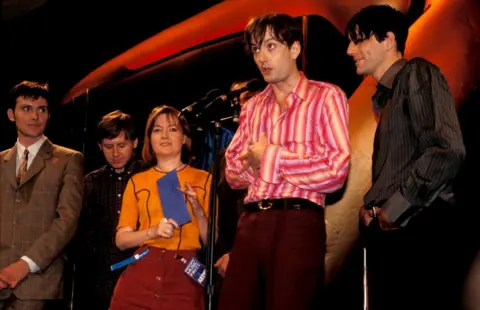
Fender is not the first artist to contribute his Mercury Prize prize money to charitable organizations.
In Pulp earned the prize in 1996 for their record Different Class, frontman Jarvis Cocker announced that the act would contribute their cash to the charity the charity.
In 2002, rapper and singer the artist divided her award among a few good causes, such as the children's charity and a Sickle Cell charity.
"And I contributed a £1,000 to my local community centre, to their gymnastics class, because I practiced gymnastics when I was younger and they required new equipment," the artist shared with outlets.
In recent years, they donated their funds to the youth organization that developed their band, as well as other grassroots music organisations.
Also the 1994 recipients the group gave their prize to a multiple sclerosis charity after a acquaintance was identified with the illness.
"Receiving the award was sufficient," remarked vocalist Small. "The prize was the bonus but we didn't need the extra, because we had the main prize. So our winning affected another person's life."
In the past week, the Music Venues Trust revealed it had saved a couple of small stages in that region, by placing them under local control.
The first in that area and The Croft in the city were purchased under the community ownership initiative, which is backed by the arts council and enthusiasts who buy "shares" in the buildings.


